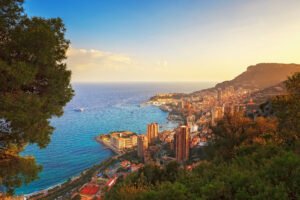
Speed at sea is generally measured in knots, an indispensable unit for all boating enthusiasts and maritime professionals. Whether you are sailing in Monaco, Saint-Tropez, Cannes, or other popular coasts, knowing how to convert knots to kilometers per hour is essential for planning your cruises, optimizing your performance, and ensuring safe navigation. This knowledge is particularly important for owners of luxury yachts, sailboats, pleasure boats, or superyachts who wish to fully enjoy their experiences at sea.
Table of Contents
ToggleWhat is a Knot and Why Use It
A knot corresponds to one nautical mile per hour, or approximately 1.852 km/h. This universal unit is used in boating to standardize vessel speed and facilitate long-distance navigation calculations. For motor yachts, sailboats, and superyachts, mastering this unit allows for effective comparison of different boat speeds and planning precise itineraries, while ensuring passenger safety and comfort.
Formula for Converting Knots to km/h
Converting a speed from knots to km/h is simply done by multiplying the number of knots by 1.852. For example, a yacht sailing at 20 knots travels at 37.04 km/h. A pleasure sailboat at 10 knots corresponds to 18.52 km/h. This simple formula can be applied to all types of vessels, whether luxury yachts, cruising sailboats, or offshore fishing boats.
Inverse Conversion: km/h to Knots
To convert kilometers per hour to knots, simply divide the speed in km/h by 1.852. For example, a boat moving at 50 km/h corresponds to approximately 27 knots. This inverse conversion is particularly useful for comparing a boat’s speed with official maritime indications and planning your cruises with precision, whether in the Mediterranean or for international destinations.
Tools and Tips for Quick Conversion
To save time and avoid errors, many tools and GPS applications automatically convert knots to km/h and vice versa. Professional navigators also use conversion tables and nautical guides to quickly calculate distances and travel times. These resources are indispensable for owners of luxury yachts and superyachts, as well as for pleasure boaters who wish to optimize their cruises in Saint-Tropez, Cannes, or Monaco.
Luxury Yachts and Superyachts
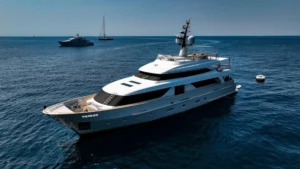
Luxury yachts and superyachts often cruise at speeds between 12 and 25 knots, or 22 to 46 km/h. Knowing the exact conversion to km/h is crucial for planning stopovers, managing fuel consumption, and ensuring optimal passenger comfort. Superyachts equipped with powerful engines or latest-generation stabilizers allow for more stable and faster navigation, while guaranteeing unparalleled luxury on board.
Sailboats and Pleasure Boats
For sailboats and pleasure boats, speeds generally range from 5 to 15 knots, or 9 to 28 km/h. Understanding this conversion helps navigators calculate the time needed to reach each destination and compare the performance of different vessels. Mastering knots and their conversion is a key element for any private cruise, whether it’s a day trip or a multi-day navigation along the French Riviera.
Safe Navigation and Cruise Planning
Mastering the conversion between knots and km/h also allows for better anticipation of weather conditions and management of distances at sea. Whether you own a luxury yacht, a modern sailboat, or a pleasure boat for family excursions, this skill ensures a safer and more enjoyable experience. Planning a cruise between Monaco, Cannes, and Saint-Tropez becomes simpler and more precise, thus optimizing your time and resources.
Practical Examples of Common Speeds
A 12-meter sailboat can navigate between 5 and 10 knots, or 9 to 18 km/h. A 30-meter luxury yacht often reaches 20 to 25 knots, equivalent to 37 to 46 km/h. Fast yachts and superyachts can exceed 40 knots, or more than 74 km/h. Knowing these conversions allows you to compare boats, plan your itineraries, and enjoy smooth and safe navigation.
Conclusion
Remembering that one knot is equivalent to 1.852 km/h is essential for all boating enthusiasts and owners of yachts, sailboats, pleasure boats, and superyachts. This skill allows for precise navigation, optimizing your journeys, and ensuring safety and comfort on board. Whether you are exploring the Mediterranean, the French Riviera, or international destinations, mastering this conversion is an indispensable asset to fully enjoy your cruises.